

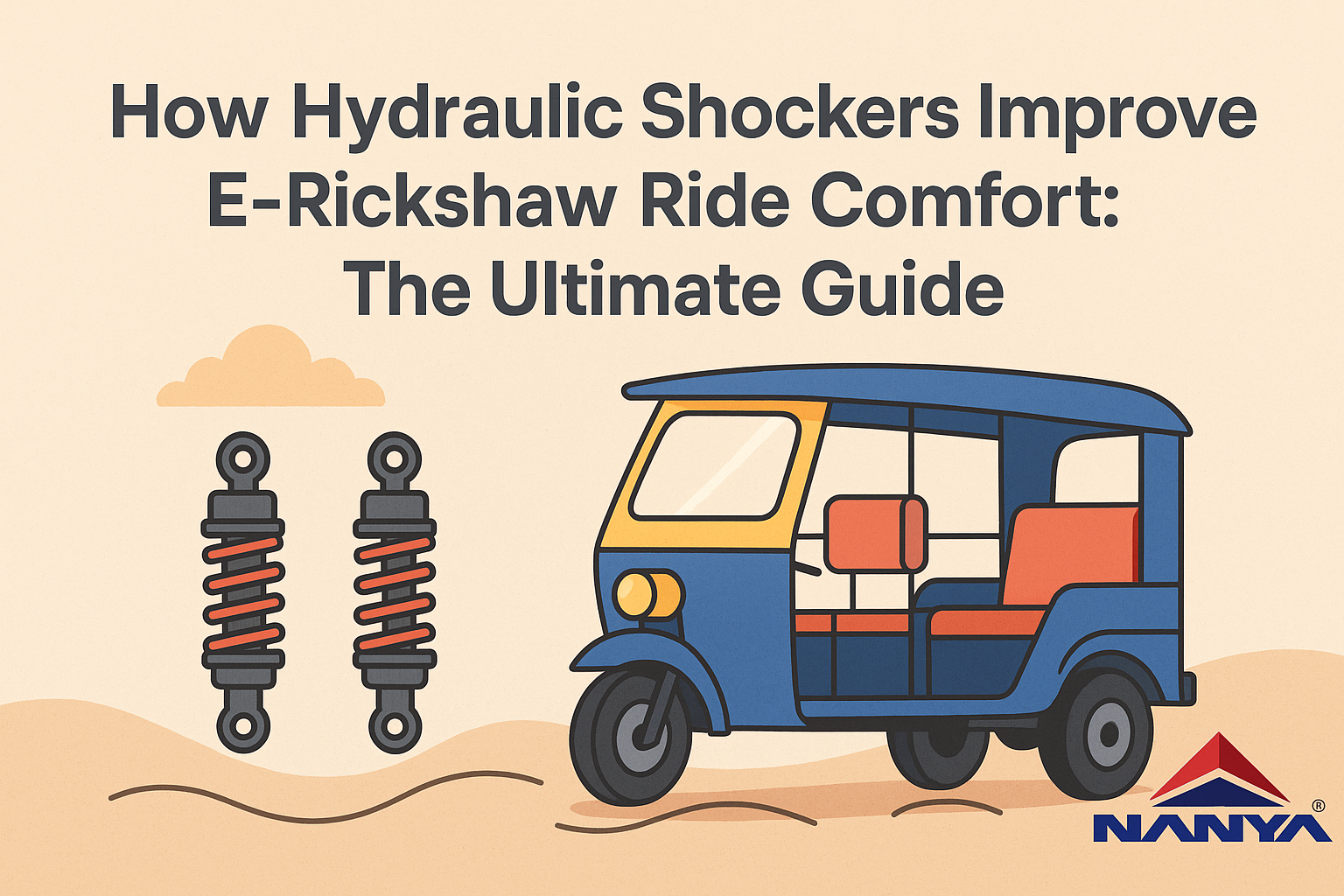
E-rickshaws have dramatically reshaped the landscape of urban transport in India. As eco-friendly, cost-effective, and electric-powered vehicles, they cater to short-distance commuters in bustling cities and towns. But while their environmental and economic advantages are undeniable, one consistent pain point is ride discomfort.
Bumpy roads, uneven surfaces, and poorly maintained city infrastructure expose passengers and drivers alike to jerks, vibrations, and general discomfort. That’s where hydraulic shockers—also called hydraulic shock absorbers—come into play.
Adding these to your e-rickshaw isn’t just a luxury upgrade; it’s a strategic investment in long-term comfort, vehicle health, and even your income. Let’s break it all down.
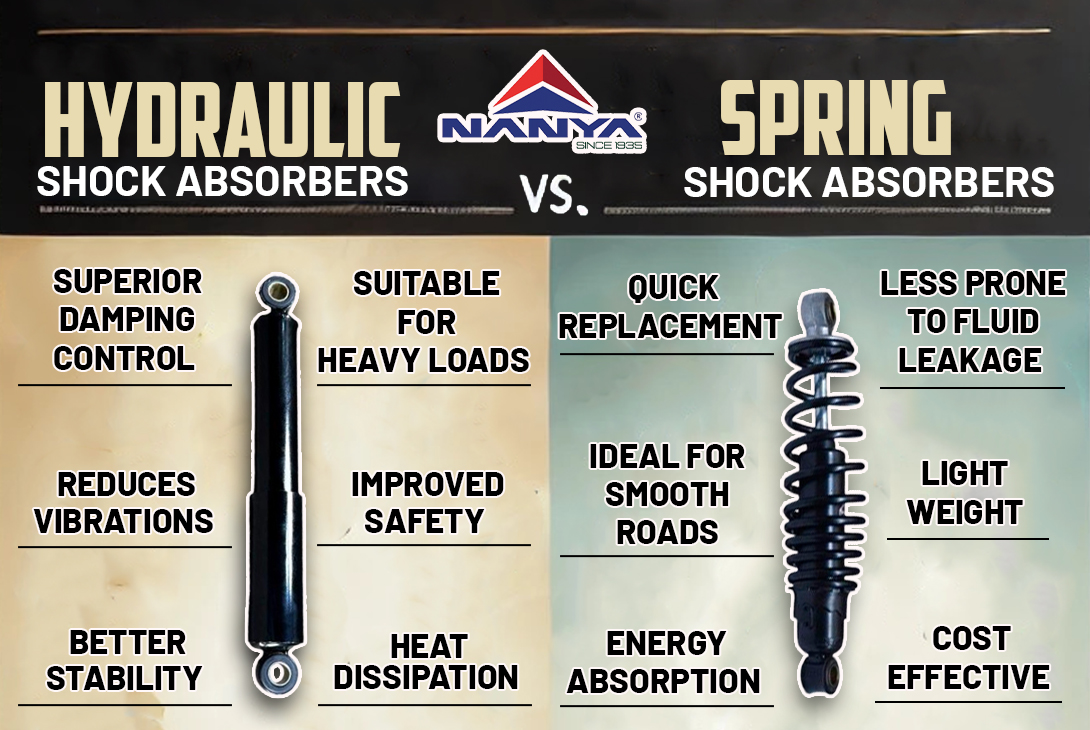
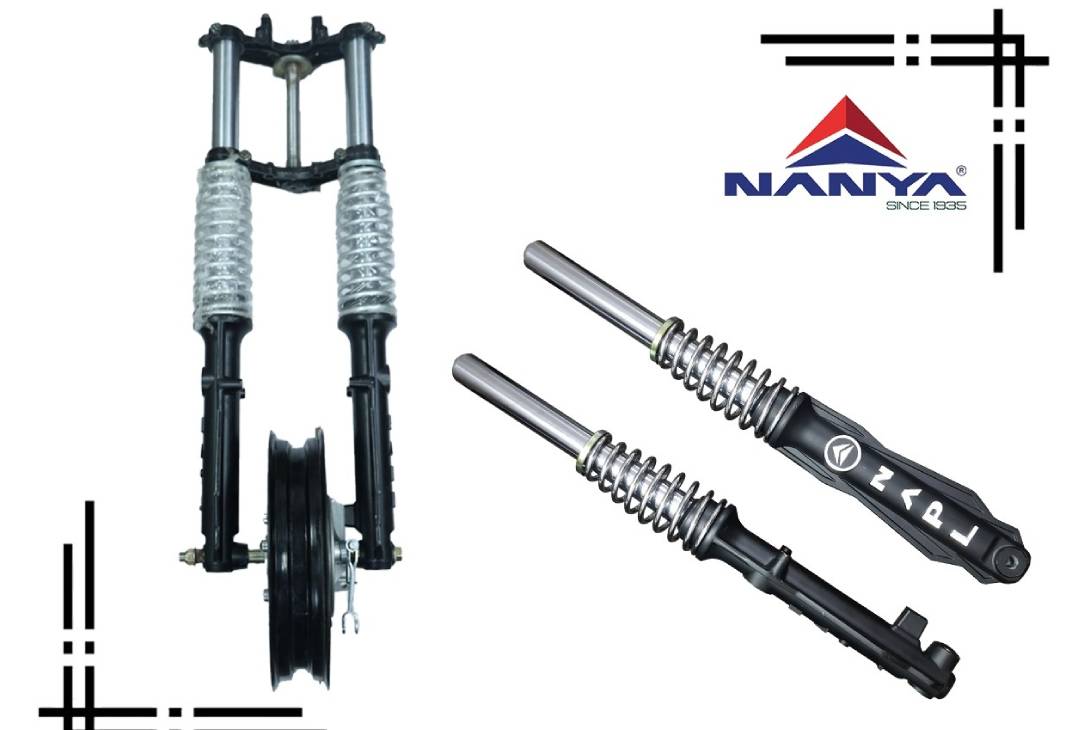
Hydraulic shockers are becoming essential for e-rickshaw drivers navigating India's rough roads. Brands like Nanya offer high-performance parts tailored to this need.
Hydraulic shockers are components in a vehicle’s suspension system designed to absorb and dampen shock impulses. They work by converting kinetic energy from bumps into heat energy, which is then dissipated through hydraulic fluid.
When your e-rickshaw hits a pothole or speed bump:
|
Type |
Key Feature |
Ideal For |
|
Hydraulic (Oil-Filled) |
Uses liquid for dampening |
Most common in e-rickshaws |
|
Gas-Charged |
Filled with nitrogen gas & oil |
Offers firmer suspension |
|
Dual Action |
Works in both compression and rebound |
High-performance models |
Imagine a ride without constant jolts. That’s what hydraulic shockers deliver. They absorb the road's unevenness and minimize impact transmission to the chassis and passengers. This drastically improves ride quality, especially on India's unpredictable roads.

On crowded roads, this control can mean the difference between safety and collision. E-rickshaw drivers benefit from responsive handling, especially when maneuvering sharp turns or sudden stops.

Installing high-quality hydraulic shockers protects these parts from wear and tear, cutting repair bills significantly.
Rough rides waste energy. Constant vibration and jolts make the motor work harder, draining battery faster. Smooth rides achieved through shockers allow your motor to function optimally—increasing battery life and reducing the number of charges needed per day.
Let’s face it—passengers notice comfort. If your ride is smooth, they’re more likely to:

Comfort builds trust—and trust builds business.
A well-functioning shock absorber reduces the burden on other components like:

It helps avoid misalignment and mechanical failure over time.
Shockers ensure your e-rickshaw ages gracefully. With less stress on internal parts, you preserve structural integrity, resale value, and overall performance over years.
Ramesh, a 39-year-old e-rickshaw driver in Old Delhi, constantly faced complaints from passengers about bumpy rides. He frequently visited his local mechanic to fix suspension issues. After upgrading to Nanya hydraulic shockers, he noticed:
Passengers even began to request him by name. His smooth ride experience became his unique selling point!
Without proper shockers, your e-rickshaw is prone to:
|
Problem |
Consequence |
|
Passenger Discomfort |
Poor reviews, fewer repeat rides |
|
Fast Tire Wear |
Frequent replacements needed |
|
Suspension Breakdown |
Costly mechanical failures |
|
Driver Fatigue |
Lower productivity, health issues |
|
Higher Accident Risk |
Poor control on rough roads |
|
Aspect |
Pros |
Cons |
|
Ride Comfort |
Smooth and stable |
Slightly higher initial cost |
|
Maintenance |
Reduces long-term repairs |
Requires occasional checkups |
|
Battery Efficiency |
Improves energy use |
— |
|
Passenger Appeal |
Increases loyalty |
— |
|
Vehicle Longevity |
Preserves suspension |
— |
Clearly, the advantages far outweigh any downsides—especially when long-term gains are considered.

For guaranteed compatibility and durability, choose trusted brands like Nanya that specialize in e-rickshaw parts for Indian conditions.
Nanya manufactures high-performance hydraulic shockers tailored for Indian e-rickshaws. Their products are:
|
Feature |
Before Shockers |
After Hydraulic Shockers |
|
Ride Comfort |
Poor |
Excellent |
|
Battery Life |
3–4 hrs avg. |
5–6 hrs avg. |
|
Tire Damage |
Frequent |
Rare |
|
Passenger Feedback |
Negative |
Positive |
|
Driver Fatigue |
High |
Low |
Hydraulic shockers are no longer optional—they’re essential for safety, comfort, and profitability. From boosting battery life to keeping your customers happy, these components elevate your e-rickshaw from a simple vehicle to a premium ride.
📢 Call-to-Action: Upgrade with Nanya’s Shockers
Looking to level up your e-rickshaw’s performance?
🚀 Check out Nanya’s premium hydraulic shockers—built for Indian roads and real-world riders.
Typically made from steel cylinders, pistons, and hydraulic oil. High-quality models include anti-corrosive coatings.
Yes! Most modern shockers are compatible with older models, but always check with your mechanic.
Generally, every 12–18 months depending on usage. More frequent use on bad roads may require earlier replacement.
Indirectly, yes. A smoother ride means the battery doesn’t work as hard, improving its efficiency and life span.
Absolutely. They’re designed to handle rough terrains, potholes, and even off-road conditions.